
On Extraction
Today, I’d like to convince you that there is a reckoning coming.
Consider a reality where all knowledge workers have access to an “easy” button that does all of the boring, mundane work they do not want to do. Put aside, for a moment, what the quality of that work is. The point is that the work gets done.
Now you might say, “But Mitchell, the quality of the work does matter!” To that I say: the quality of that work only matters in relation to your Aliceness or Bobness.
“But what in the world is Bobness?”
Great question. Sit down over here and let’s talk about it.
Let’s divide the world into two archetypes: Alice and Bob. Alice is a high achiever, a go-getter, one of the few who actually drive success wherever they are. Alice is the crux of Price’s law—that principle everyone is always yammering on about despite never reading the paper1. Bob is everyone else. Bob shows up when he has to, does what he must, and logs out at precisely 4:57 PM so he doesn’t spend a minute longer in the office than he is paid to.
Imagine you are Bob. Statistically, you probably are. That’s not a bad deal, as we’ll explore shortly. Bob embodies fairness, if you think about it long enough (which I have). Bob is treating his employer the way he is being treated. It is a form of game theory where they both try to extract the most value (money) they can without permanently damaging the relationship. If you are indeed Bob and you are working a boring job that you do not fundamentally care about, why wouldn’t you smash the easy button if it means you get a few more minutes to watch YouTube videos or gossip with your coworkers? Obviously that is the natural response.
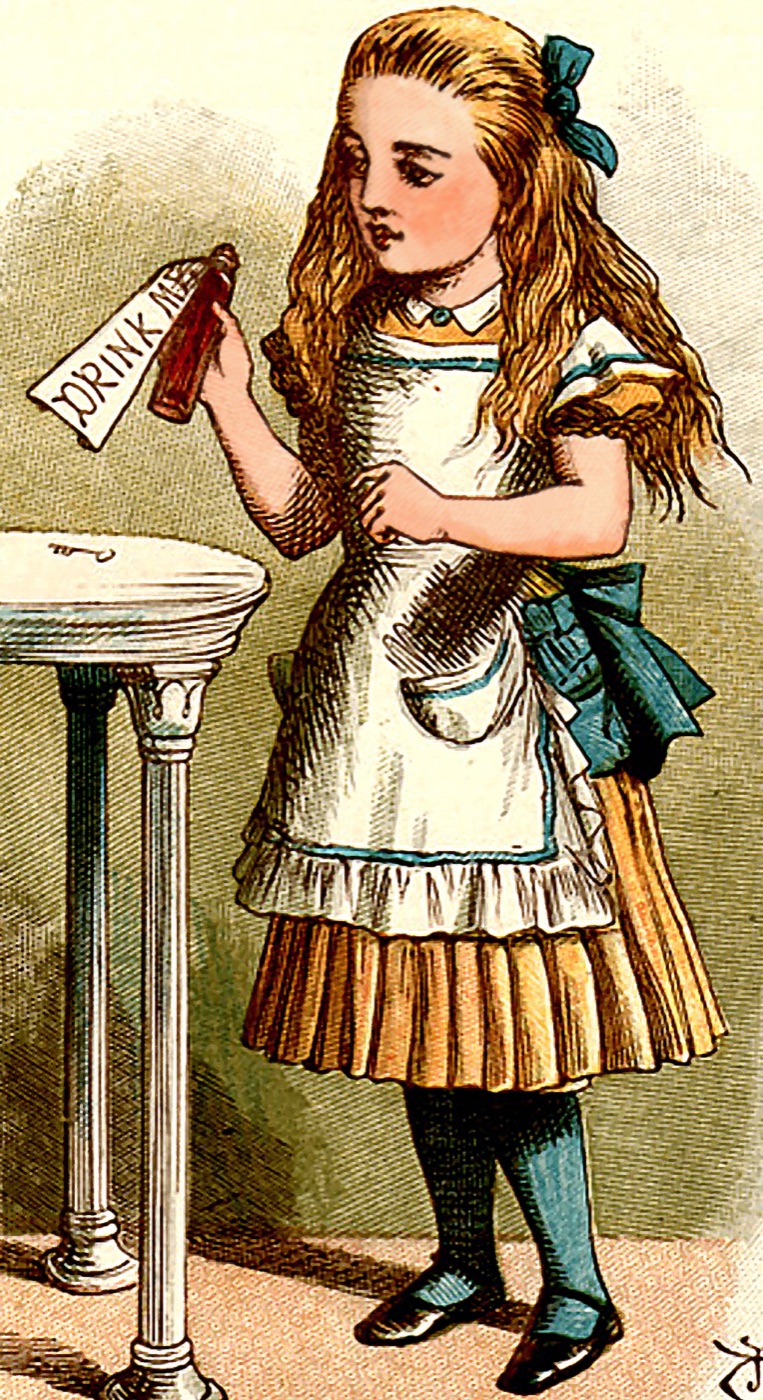

Now, on the other side of the equation, there are those select few who care deeply about their work.
This is Alice. Maybe Alice doesn’t care about the mission statement of her employer, but she takes pride in her work and probably gains some measure of self-worth from being damn good at what she does. Alice is different. Alice will see that easy button and might be a bit skeptical. She will say—and rightly so, I suspect—that “that button can’t do the work as well as I can.” And she will resist, for a while. But then, she’ll grow curious. She’ll think about all the times she gave menial tasks to Bob, and she will think, “Well, it can’t be so bad as that.” Right again, I would say. Alice will poke and prod at that easy button. She will understand its inner workings like she understands the 10-year-old database migration application that she thanklessly maintains. The way she understands how the most important product in the company actually works and how to sell that to prospective customers. And she will realize, one day, that she has donned a mech-suit.
She is a giant amongst mortals.
And Alice will poke and prod more and more and more, until she is doing as much work as the rest of her team combined. Soon, she is outworking the entire department, then, maybe, the company itself. And she will sit back one day, running on 4 hours of sleep and adrenaline and pure joy at the productivity, and only then will she ask: “Wait, is this good?”
Is it good?
Who gets the benefits of the productivity boost from AI? Is it the employees? Up to a point, one could make the argument that the answer is yes. But only up to a point. And that point is hit pretty quickly by the average Bob. The one who does not care whether the corporation hits its quarterly earnings expectations. They accrue the value from AI usage because they are simply doing less. And filling their time with whatever they want. They, quite quickly, I think, hit an equilibrium of using AI to do their job. The work may be a bit worse, but if they are a smart Bob they will keep it within reason. They may get replaced when the next frontier models drop in 2027, and I’m sure that anxiety is making it hard to relax. But the work? The work is easy, for now.
Now, consider the high performers. The ones feverishly learning, building, striving to do more, more, more. Who gets the benefits of all that frenetic activity? I’ll give you a hint: it’s not them. It is the company. If revenue goes up 30%, and AI spend cuts into 10% of that, you’re looking at a 20% profit increase. That ain’t going to Alice, is it?
So the question becomes: what does Alice do? We know what Bob does. Bob stresses about his job, but mostly does nothing and enjoys life. Because he doesn’t care, and he is not responsible for the 20% margin increase. Alice is, though, and if she’s smart, which I think she is, she knows it. So what does she do? A high achiever on the edge of burnout with rock-solid intuition that she is getting milked for every last joule in her brain. And a salary increase of, what, 10%? The company makes $10M; Alice gets $10K. Seem fair? I don’t think so.
What’s a girl to do then? Leave? Fight back? Become Bob? I don’t know the answer to that one, but I think it’s a question every single company should be asking itself.
Companies will have to decide what they are doing up front, or the decision will be made for them when their best and brightest burn out or leave and the rest are too checked out to pick up the slack. Not making a decision is the decision and it will bite them.
Here’s a prediction: companies will shrink or they will be forced to turn their profits inwards to keep the Alices of the world happy. They have to; otherwise, they’ll be left with only Bobs.

-
Here’s the link to the paper “Price’s Square Root Law: Empirical Validity and Relation to Lotka’s Law”. No, I haven’t read it. Leave me alone. ↩